AMOLED Ambitions and What They Mean for Industrial LCD Module Selection
Why AMOLED’s Latest Breakthrough Demands a Fresh Look at LCD Selection
For hardware engineers and procurement directors evaluating display technologies for industrial, medical, or automotive systems, the rapid advancement of AMOLED presents a compelling but often misleading narrative. Visionox’s recent announcements around its ViP (Visionox intelligent Pixelation) and pTSF (p-Type TFT) technologies suggest AMOLED may be closing the gap on LCD in areas like brightness and lifetime.
But for OEMs designing products with 7–10 year lifecycles, the question isn’t whether OLED is better—it’s whether OLED is right for their specific operating environment. This article breaks down the real trade-offs, helping you navigate industrial LCD module selection with clarity and confidence.
Visionox’s Technological Leap: Decoding ViP and pTSF and Their Claimed Benefits
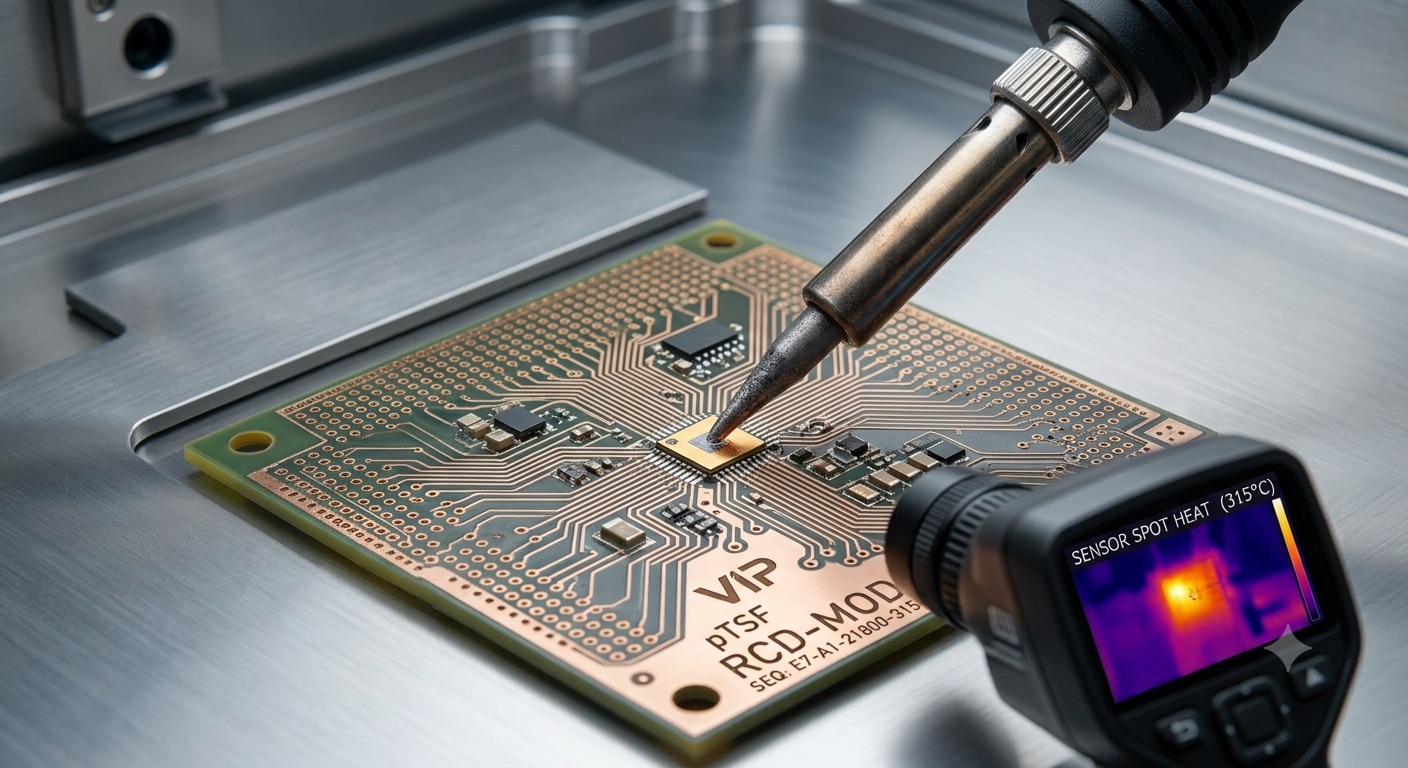
Visionox has positioned ViP and pTSF as game-changers for AMOLED. ViP replaces the traditional fine metal mask (FMM) process with a photolithography-based approach, enabling higher pixel density and more uniform deposition of organic materials. The claimed benefits include improved brightness uniformity, reduced mura defects, and better scalability to larger substrates. For display specifiers, this means AMOLED panels could potentially reach higher resolutions and more consistent visual quality—critical for applications like medical monitors or high-end instrumentation.
pTSF, on the other hand, addresses one of OLED’s historical weaknesses: temperature stability. By using p-type oxide TFTs instead of conventional LTPS or a-Si backplanes, Visionox claims improved electron mobility and more stable current output at elevated temperatures. This could extend the usable temperature range of AMOLED panels, making them slightly more viable for industrial environments where heat buildup is common.
However, it is important to view these advances with measured optimism. While ViP and pTSF represent meaningful engineering progress, they remain early-stage technologies. Volume production yields, long-term field reliability data, and compatibility with harsh environmental stressors are still largely unproven. For OEMs evaluating industrial LCD module selection, these innovations are worth monitoring but not yet a reason to abandon LCD as the default workhorse.
OLED vs. LCD Trade-offs in Real-World B2B Environments: Brightness, Lifespan, and Total Cost of Ownership
When comparing AMOLED vs LCD for B2B applications, the fundamental physics of each technology dictates performance boundaries that no amount of process refinement can fully erase.
Brightness and Sunlight Readability
AMOLED panels typically achieve 300–600 nits in standard configurations, with some premium units reaching 1000 nits. LCD modules, by contrast, routinely deliver 800–1500 nits for industrial use, with high-brightness variants exceeding 2500 nits. For outdoor equipment, vehicle dashboards, or medical carts used near windows, LCD’s superior luminance and optical efficiency—especially when paired with direct-lit LED backlights—remains decisive. Even with Visionox’s ViP improvements, AMOLED struggles to match LCD’s brightness without accelerating organic material degradation.
Lifespan and Burn-In
The LCD vs OLED lifespan debate is well-documented. OLED’s organic emitters degrade over time, with blue subpixels typically failing first. Industry reports suggest typical AMOLED lifetime (to 50% initial brightness) may range from 30,000 to 50,000 hours under continuous use, depending on brightness levels and image content. In contrast, industrial-grade LCD modules with LED backlights often exceed 70,000–100,000 hours before backlight replacement is needed, and the LCD cell itself does not inherently degrade. For medical monitors displaying static waveforms or industrial HMIs with fixed menus, OLED burn-in risk is a real liability.
Total Cost of Ownership
- Initial cost: AMOLED panels currently command 20–40% premium over comparable LCD modules at equivalent resolution and size.
- Maintenance: OLED modules often require complete replacement upon burn-in; LCD modules can sometimes have backlights replaced individually.
- Lifecycle support: LCD supply chains offer 5–7 year product lifecycle guarantees; AMOLED modules may see shorter availability as consumer-driven product cycles shift.
For OEMs manufacturing equipment with 10+ year field support requirements, the TCO advantage clearly favors LCD.
The Forgotten Advantage: Why LCD Module Supply Chains Remain More Resilient for Long-Lifecycle Industrial Products
Beyond technical specifications, the display supply chain comparison reveals a structural advantage for LCD that is often overlooked in the AMOLED vs LCD debate.
Multi-Sourced Backlight and Panel Supply
LCD modules benefit from a mature, multi-tier supply chain. Panel manufacturers like BOE, Innolux, and AUO produce LCD cells in high volume across numerous fabs. Backlight units are sourced from specialized manufacturers globally. This redundancy means that if one supplier faces disruption, alternative sources exist. AMOLED, by contrast, relies on a smaller number of fabs—often proprietary to specific brands—and organic material supply is concentrated among fewer chemical suppliers.
Long Product Lifecycles
Industrial LCD modules are designed for stability. A well-engineered 7-inch or 10.1-inch LCD module from Relialink may remain in production for 5–7 years, with last-time-buy notifications allowing OEMs to stockpile for continued support. AMOLED panels, driven by consumer smartphone and TV cycles, often see model refreshes every 12–18 months, making long-term availability uncertain.
Environmental Robustness
LCD modules operate reliably across -20°C to +70°C (or wider with heater options), withstanding vibration, humidity, and UV exposure. AMOLED’s organic layers are more sensitive to moisture and oxygen, requiring robust encapsulation. Even with pTSF improvements, OLED’s temperature range and environmental tolerance lag behind industrial LCD standards.
For procurement directors managing risk in automotive or medical supply chains, LCD’s proven supply resilience is a powerful argument.
Relialink’s Take: Matching the Right LCD Technology to Automotive, Medical, and Outdoor Embedded Applications
At Relialink, our industrial LCD module selection philosophy centers on matching display technology to the application’s specific environmental, lifecycle, and performance demands. Here is how we guide OEMs across key sectors:
Automotive (Instrument Cluster and Infotainment)
- LCD choice: High-bright TFT with wide temperature range (-30°C to +85°C) and optical bonding for sunlight readability.
- Why not OLED: Burn-in risk from static gauge elements, heat buildup behind dashboards, and long vehicle lifecycle (10–15 years) favor LCD reliability.
- Where OLED may fit: Center stack infotainment displays with dynamic content and shorter ownership cycles (luxury EVs).
Medical (Patient Monitors and Diagnostic Equipment)
- LCD choice: Medical-grade IPS LCD with consistent color reproduction, anti-glare surface, and 50,000+ hour backlight life.
- Why not OLED: Static waveforms and menu bars cause uneven pixel wear; calibration stability over time is critical for diagnostic accuracy.
- Where OLED may fit: Portable handheld devices with lower brightness requirements and shorter replacement cycles.
Outdoor Embedded (Kiosks, EV Chargers, Industrial HMIs)
- LCD choice: Ultra-high brightness (1500+ nits), optically bonded for contrast, and UV-resistant polarizers.
- Why not OLED: Sunlight readability demands 1000+ nits, which accelerates OLED degradation; outdoor temperature extremes exceed OLED’s safe range.
- Where OLED may fit: Indoor kiosks with low ambient light and dynamic, non-static content.
The key takeaway: AMOLED is not a universal replacement. It excels in consumer-grade, dynamic-content applications with controlled environments. For rugged, long-life industrial, medical, and automotive systems, LCD remains the proven, lower-risk choice.
Making the Right Display Decision for Your Next Project
As Visionox and other OLED manufacturers continue to push their technology forward, OEMs must resist the temptation to adopt AMOLED simply because it is newer or more prominently marketed. The AMOLED vs LCD decision should be grounded in a clear-eyed assessment of brightness requirements, operating temperature range, expected product lifecycle, and supply chain stability. For applications where 70,000+ hours of reliable operation, sunlight readability, and multi-year availability are non-negotiable, industrial LCD modules from a trusted manufacturer like Relialink deliver decisive advantages.
Looking for a reliable LCD module supplier for your next industrial, medical, or automotive project? Contact Relialink today to discuss your custom display requirements and let our engineering team help you select the optimal LCD technology for your application.