OLED Display Modules
Self-emissive OLED modules in monochrome and RGB configurations from 0.96'' to 5.5'' — ideal for wearables, medical devices, and premium consumer products.
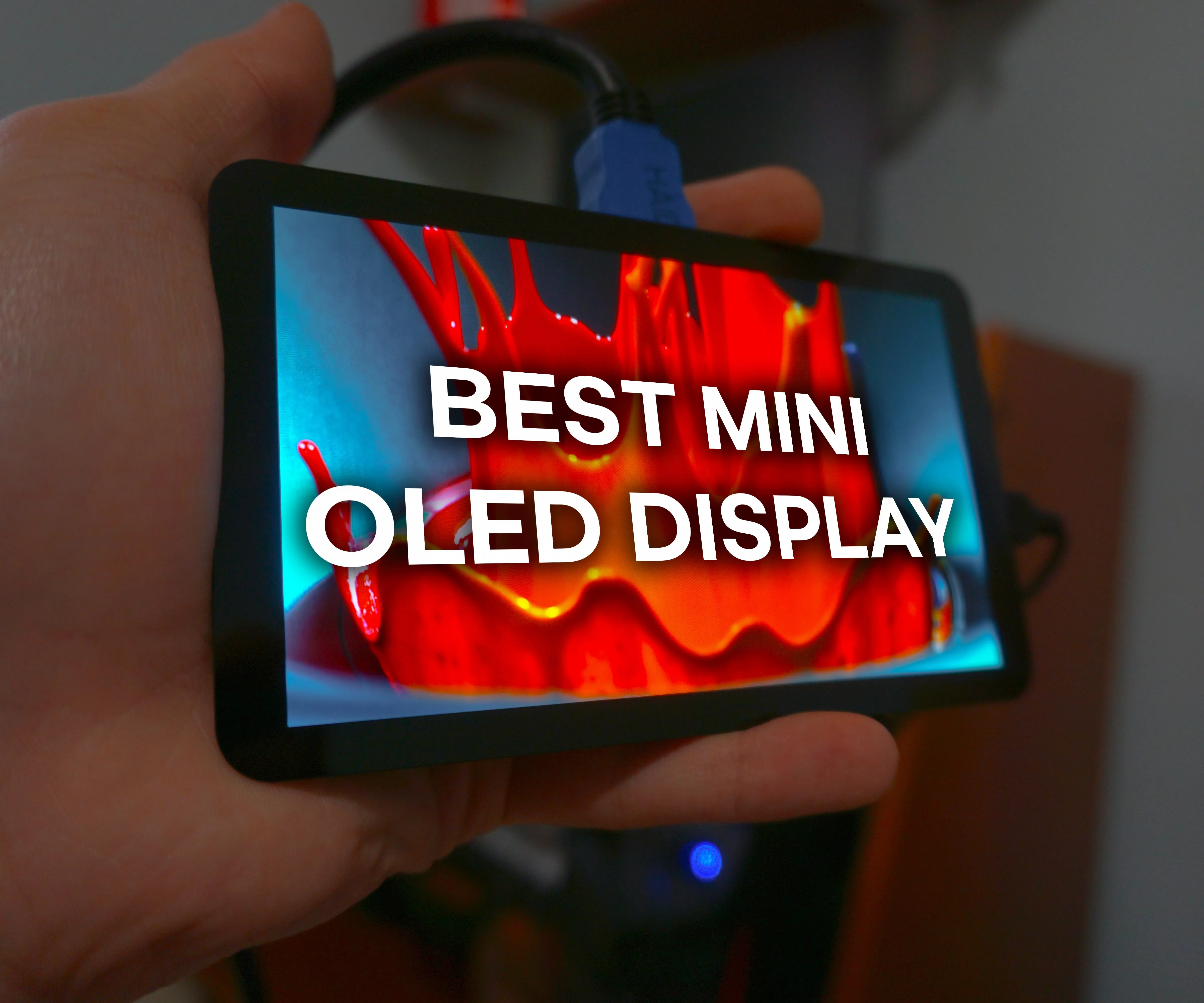
Product Overview
OLED (Organic Light-Emitting Diode) displays represent a fundamentally different approach to display technology: each pixel generates its own light, eliminating the need for a backlight entirely. This self-emissive architecture delivers absolute black levels (unlit pixels consume zero power), infinite contrast ratio, and viewing angles approaching 180° — performance characteristics that LED-backlit LCD displays cannot match.
Relialink's OLED display module range spans 0.96" to 5.5" diagonal, covering the most widely used sizes in wearable devices, medical instruments, industrial controllers, automotive instrument clusters, and IoT products. Color options include white, blue, yellow, yellow-and-blue bicolor, and full RGB, with resolutions from 128x32 to 256x64 (monochrome) and up to 128x128 (RGB). Interfaces include SPI, I2C, and parallel, with SSD1306, SSD1327, SSD1351, and other industry-standard controllers.
The low power consumption of OLED displays is a critical advantage in battery-powered applications. Since only lit pixels consume power, a display showing predominantly dark content (common in instrument and notification displays) uses a fraction of the energy of an equivalent backlit LCD. This property makes OLED the preferred choice for wearables, portable medical devices, and any product where battery runtime is a design constraint.
Relialink's OLED modules are manufactured under ISO 9001:2015 quality management and comply with RoHS standards. Custom sizes, colors, and interface configurations are available for OEM applications.
Key Features
Self-Emissive Technology
No backlight required — each pixel emits its own light, enabling true blacks and exceptional contrast ratios.
Ultra-Wide Viewing Angle
Consistent image quality at virtually any viewing angle — critical for handheld and wrist-worn devices.
Low Power
Only lit pixels consume energy — ideal for always-on display modes and battery-powered products.
Fast Response Time
Sub-millisecond pixel response enables smooth animation and motion without ghosting.
Compact and Thin
No backlight assembly means thinner module cross-sections — valuable in space-constrained designs.
SPI and I2C Support
Minimal MCU pin usage with I2C (2-wire); higher speed with SPI (3-4 wire).
Specifications
| Diagonal Size | 0.96", 1.3", 1.5", 2.42", 3.12", 5.5" |
| Resolution | 128x32, 128x64, 256x64, 128x128, 256x256 |
| Display Color | White, Blue, Yellow, Yellow/Blue bicolor, RGB |
| Interface | SPI (3/4-wire), I2C, 6800/8080 Parallel |
| Controller IC | SSD1306, SSD1327, SSD1351, SH1106, CH1116 |
| Brightness | 80-200 cd/m² typical (adjustable via firmware) |
| Contrast Ratio | >2,000:1 (inherent to OLED technology) |
| Viewing Angle | Near 180° (H and V) |
| Operating Temperature | -20°C to +70°C (standard), -40°C to +85°C (wide temp) |
| Supply Voltage | 3.3V / 5V (onboard regulator) |
| Compliance | RoHS |
Applications
Wearable Devices
Smartwatches, fitness trackers, and health monitors use small OLED modules (0.96"-1.5") for clear readout in all orientations with minimal battery impact.
Portable Medical Devices
Pulse oximeters, glucometers, handheld ECG monitors, and drug infusion controllers use OLED for high-contrast readout and low power operation.
Automotive Instrumentation
Secondary instrument clusters, TPMS displays, and head-up display driver boards use OLED for fast response and wide temperature performance.
Industrial Controllers
Compact OLED modules are embedded in panel meters, relay controllers, and field instruments where a small, high-contrast numeric or graphic display is needed without the complexity of a full TFT system.
IoT & Smart Home Devices
Smart meters, home energy monitors, and connected appliances use small OLED modules for status display and basic UI without significant power draw.
Consumer Electronics
Earphone cases, portable audio equipment, and handheld gaming accessories use OLED for premium aesthetics and compact integration.
Optional Configurations
Related Products
Frequently Asked Questions
How long do OLED displays last?
OLED displays have a rated lifetime of 50,000-100,000 hours to half-brightness (T50) under normal operating conditions and moderate brightness settings. Blue subpixels degrade faster than red and green in RGB OLEDs — this is a known characteristic of OLED technology. For applications requiring extended display longevity, we recommend managing brightness levels via firmware and implementing screen dimming for idle states.
Are OLED displays suitable for always-on applications?
OLED can be used for always-on applications, but careful design management is recommended. Displaying static content at full brightness for extended periods can cause image retention (temporary) or burn-in (permanent) on OLED panels. Best practices include: implementing a screensaver or pixel-shifting algorithm, reducing brightness for static content, and using white or light backgrounds sparingly. For always-on applications with static content, an STN or FSTN LCD with backlight control may be a better choice.
Ready to Evaluate or Order?
Sample units with 1-2 week delivery. Compatible with Arduino, Raspberry Pi, and all major MCU platforms. MOQ 100 units.