How AI-Powered Manufacturing Elevates LCD Module Quality and Supply Chain Efficiency
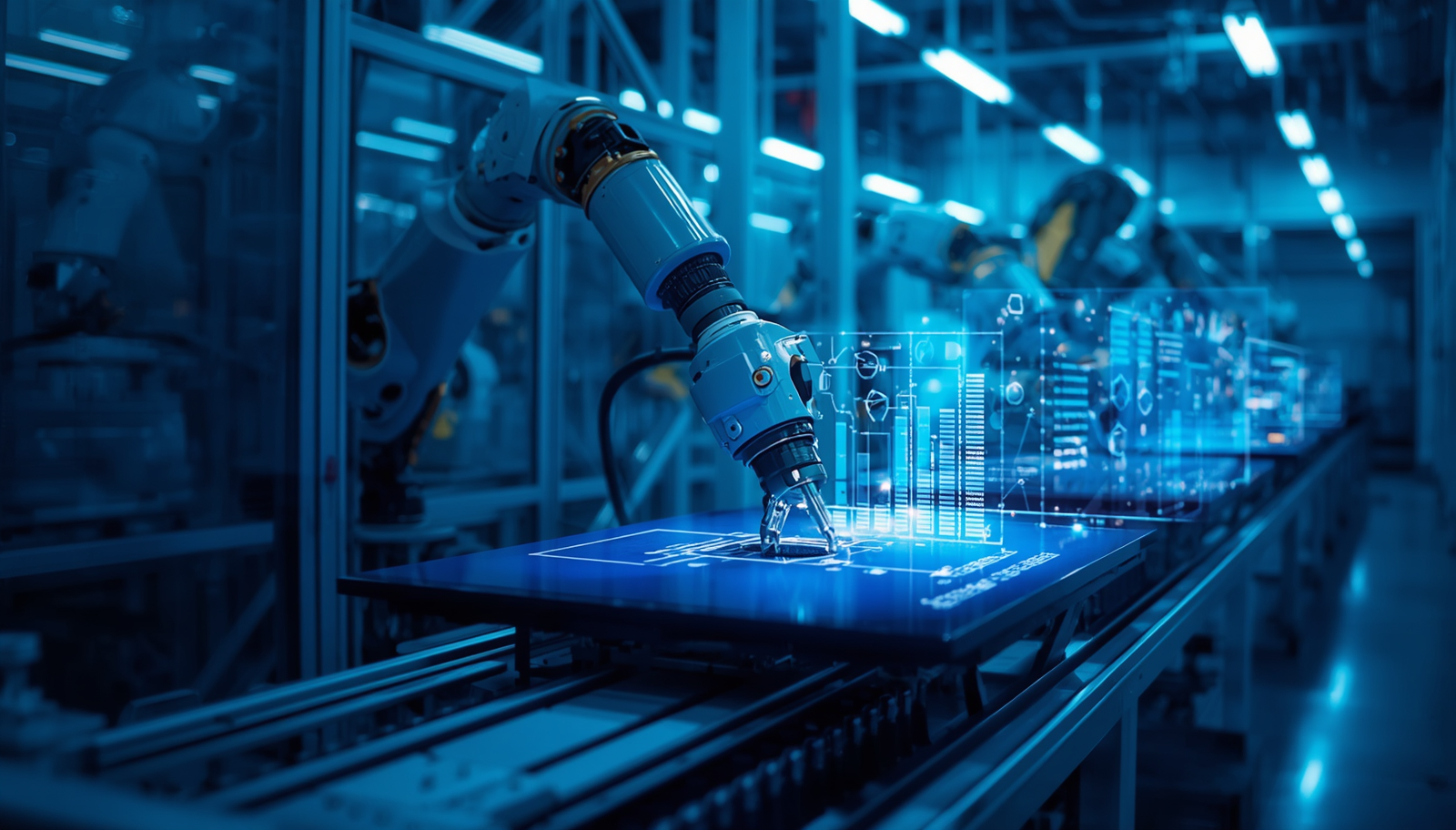
The Shift from Manual Inspection to AI Vision: Redefining Defect Detection in LCD Module Assembly
For decades, LCD module assembly relied on human visual inspection at critical checkpoints. Operators examined polarizer alignment, cell gap uniformity, and backlight consistency under magnifying lamps. While experienced inspectors catch obvious defects, the process is inherently limited by human fatigue, inconsistent lighting conditions, and the sheer speed of modern production lines. For OEMs sourcing industrial-grade displays, even a 0.5% defect rate can translate into costly field failures or delayed project timelines.
AI-powered machine vision systems have fundamentally changed this equation. Instead of static threshold-based checks, modern AI vision platforms learn from thousands of annotated images to detect microscopic anomalies—such as pixel-level mura, uneven color temperature across the panel, or sub-millimeter foreign particle contamination—that human eyes routinely miss.
In our own production lines at Relialink, we have deployed convolutional neural networks (CNNs) trained specifically on LCD defect patterns. These systems operate at line speed, inspecting every module in real time rather than sampling a subset.
The practical impact for B2B buyers is measurable. When AI vision flags a potential defect, the system can categorize it by severity (critical, major, minor) and source location. This data feeds back into upstream process controls, creating a closed-loop correction mechanism. For example, if a specific COG (chip-on-glass) bonding station begins producing alignment drift, the AI system detects the trend within minutes—not at the end of a shift.
The result is a significant reduction in escape rates for industrial LCD module suppliers, directly translating to higher first-pass yield and fewer warranty claims for OEM customers.
What This Means for Consistency Across Batches
Industrial and medical display applications demand batch-to-batch optical consistency. AI vision systems maintain a digital fingerprint of acceptable optical parameters for each product SKU. When a new production run begins, the system compares every module against this baseline, flagging deviations that could affect end-user readability under harsh lighting or extreme temperatures. This level of consistency is particularly critical for multi-year industrial projects where replacement displays must match the original installation exactly.
Predictive Maintenance in LCD Backend Processes: Minimizing Downtime for Volume Orders
Unplanned production downtime is the enemy of on-time delivery. For OEMs placing volume orders for custom LCD modules, a stalled production line can ripple into missed customer commitments and expedite fees. Traditional reactive maintenance—waiting for a machine to fail before repairing it—is no longer acceptable in a competitive supply chain environment.
Predictive maintenance, powered by AI, monitors equipment health through continuous sensor data streams. In LCD backend processes such as polarizer lamination, ACF (anisotropic conductive film) bonding, and backlight assembly, vibration sensors, thermal cameras, and current draw monitors feed data into machine learning models. These models learn normal operating signatures and detect subtle anomalies that precede mechanical failure.
For example, a laminator roller bearing that begins to show increased vibration amplitude can be scheduled for replacement during planned changeover windows rather than causing a mid-shift breakdown. Similarly, temperature drift in reflow ovens used for FPC (flexible printed circuit) bonding can be corrected before it produces a batch of cold solder joints. By predicting these failures 48 to 72 hours in advance, we can coordinate maintenance with production scheduling, minimizing disruption to customer order timelines.
The Supply Chain Reliability Advantage
For procurement directors evaluating industrial LCD module suppliers, predictive maintenance capability signals a mature manufacturing operation. It means that the supplier has invested in data infrastructure and process discipline—not just cutting-edge inspection tools. This translates to more reliable lead time commitments and fewer last-minute schedule changes. When you are planning a production ramp for a new medical device or industrial HMI (human-machine interface), knowing that your display partner can maintain consistent throughput is a competitive advantage.
How AI Optimizes Material Sourcing and Inventory for Custom LCD Projects
Custom LCD module projects often involve long-tail materials: specific polarizer grades, custom backlight LED bins, or specialized cover glass with anti-reflective coatings. Managing inventory for these materials across multiple active projects is a complex balancing act. Overstock ties up capital and risks obsolescence; understock delays production and frustrates customers.
AI-driven demand forecasting has emerged as a powerful tool for industrial LCD module suppliers. By analyzing historical order patterns, current project pipelines, and even external signals such as panel market pricing trends, AI models generate probabilistic demand forecasts at the component level. This allows procurement teams to place strategic buffer stock orders for long-lead items while keeping fast-moving consumables on just-in-time replenishment cycles.
At Relialink, we have integrated an AI-based inventory optimization module into our ERP system. When a new custom LCD project enters the engineering phase, the system automatically cross-references its bill of materials against existing stock, identifies potential shortages, and suggests alternative qualified components that meet the same specifications. This reduces the time spent on manual BOM validation and accelerates the transition from prototype to mass production.
Reducing Material Waste in Custom Runs
Custom LCD projects frequently involve small-to-medium batch sizes, which historically carry higher per-unit material waste. AI algorithms optimize panel cutting layouts (nesting) to maximize glass utilization from mother sheets. For backlight units, the system matches LED bin codes to brightness requirements, minimizing the need for over-specification. These optimizations may seem incremental, but across a portfolio of custom projects, they meaningfully reduce material costs and environmental waste—benefits that can be passed to OEM buyers through competitive pricing.
Smart Quality Control Data: Giving B2B Buyers Full Traceability and Compliance Reports
Traceability is no longer a nice-to-have in industrial and medical display procurement; it is often a regulatory requirement. OEMs need to demonstrate that every component in their final product meets specified standards, from RoHS compliance to operating temperature range validation. Traditional paper-based quality records are difficult to audit and prone to transcription errors.
AI-powered quality control systems generate structured, searchable data for every module produced. At each inspection station—from incoming glass inspection to final functional test—the system logs measurement values, pass/fail decisions, and even images of any anomalies detected. This data is linked to the unique serial number of each LCD module, creating a complete digital twin of the manufacturing journey.
For B2B buyers, this means instant access to compliance reports without manual data compilation. When an OEM quality auditor requests documentation for a specific lot, the supplier can provide a downloadable package containing all relevant inspection records, calibration certificates for test equipment, and material traceability back to original component batches. This capability dramatically simplifies the supplier qualification process and reduces the administrative burden on both parties.
Statistical Process Control (SPC) as a Service
Beyond individual module traceability, AI systems aggregate quality data across production runs to generate real-time SPC charts. These charts reveal process capability indices (Cpk) for critical parameters such as brightness uniformity and contrast ratio. For procurement managers, reviewing these charts during quarterly business reviews provides objective evidence of process stability. It also enables early warning when a process begins to drift, allowing corrective action before non-conforming modules reach the customer.
Looking for a reliable LCD module supplier for your next project? Contact Relialink today to discuss your custom display requirements and learn how our AI-driven manufacturing delivers consistent quality and on-time delivery.
Future Outlook: AI-Driven Customization and Faster Prototyping for Industrial LCD Applications
The trajectory of AI in LCD manufacturing points toward even greater customization speed. Currently, prototyping a custom industrial LCD module—from specification to first samples—can take 8 to 12 weeks. Much of this time is spent in iterative design reviews and manual adjustments to optical stack-ups, driving electronics, and mechanical integration.
Generative design algorithms are beginning to shorten this cycle. By inputting target specifications (brightness, viewing angle, operating temperature range, interface type), AI models can propose optimized optical stack configurations and driver IC selections. These proposals are based on simulations validated against thousands of previously manufactured designs, reducing the number of physical prototype iterations required.
For OEM product managers, this means faster time-to-market for new equipment. Instead of waiting weeks for revised samples, engineers can evaluate multiple design alternatives virtually before committing to a single physical prototype. The same AI systems that optimize production also accelerate the customization process.
The Path to Fully Autonomous Production Lines
While fully lights-out LCD factories remain aspirational for most manufacturers, the building blocks are being assembled. AI vision, predictive maintenance, and intelligent inventory management are converging into integrated manufacturing execution systems (MES) that require minimal human intervention for routine decisions. For industrial LCD module suppliers, the competitive advantage will increasingly belong to those who can combine AI-driven efficiency with the engineering expertise needed to handle complex custom requirements.
The industrial display market demands reliability, consistency, and speed. AI-powered manufacturing delivers on all three dimensions. As the technology matures, the gap between suppliers who have embraced AI and those who rely on traditional methods will widen—benefiting OEMs who choose forward-thinking partners.
Ready to partner with a manufacturer that combines AI-driven efficiency with deep LCD engineering expertise? Contact Relialink to discuss your next industrial display project.