In-Cell Touch Technology Explained: Benefits for Slim, High-Clarity LCD Modules
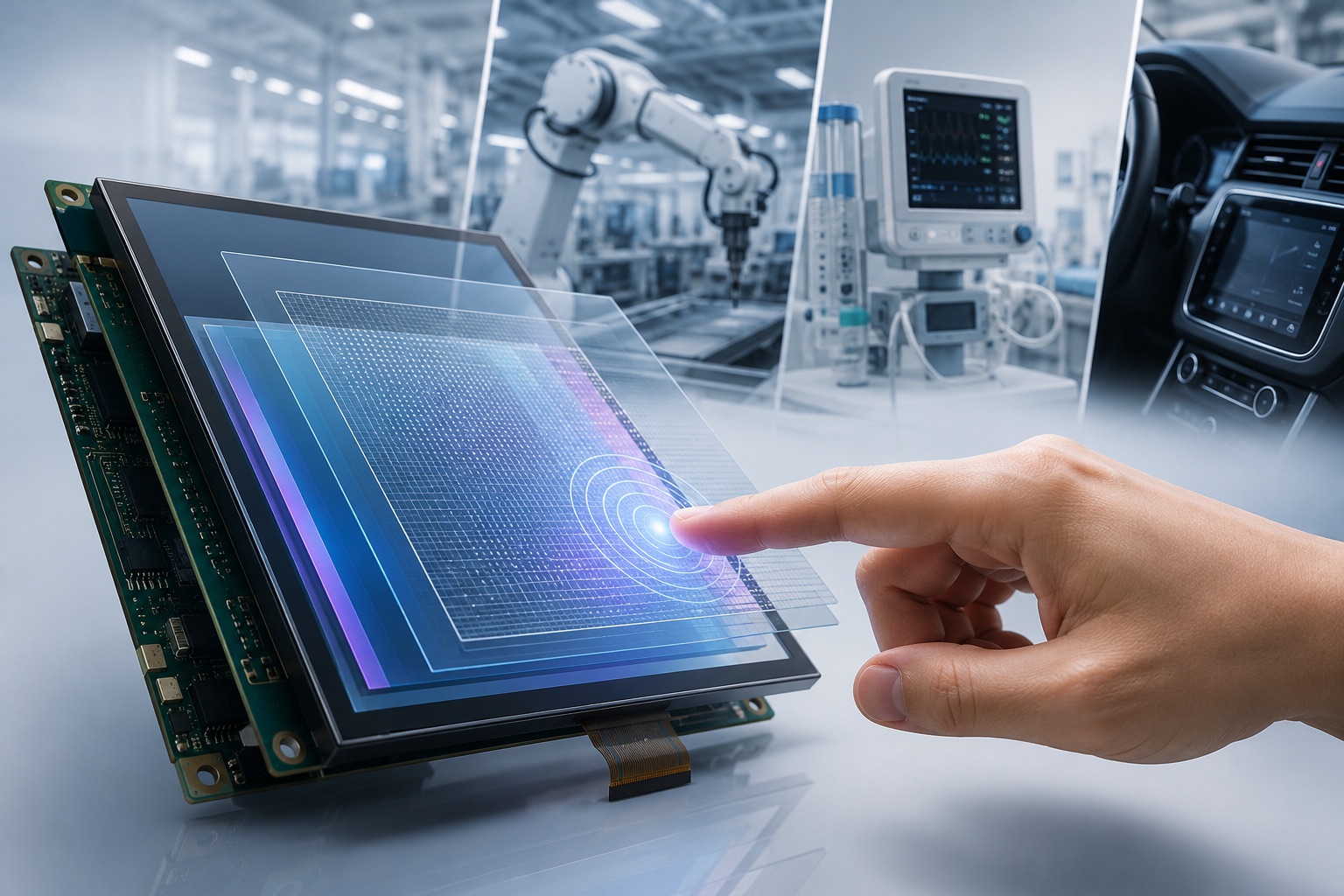
Why In-Cell Touch Technology Matters for Your Next LCD Module Design
For hardware engineers and procurement directors evaluating display solutions, the choice between touch integration methods directly impacts product thickness, optical performance, and manufacturing lead times. In-Cell touch technology has emerged as a compelling option for applications demanding slim profiles and high clarity, yet many B2B buyers remain uncertain about its practical advantages over traditional approaches.
Understanding how In-Cell differs from On-Cell and OGS—and what that means for your supply chain—can help you make informed decisions for industrial HMIs, medical displays, and automotive dashboards.
What Is In-Cell Touch and How It Differs from On-Cell and OGS
In-Cell touch technology integrates the touch sensor directly into the LCD cell structure, embedding the touch-sensing electrodes within the liquid crystal layer itself. This contrasts with On-Cell touch, where the touch sensor is deposited on top of the color filter glass but still inside the display stack, and with OGS (One Glass Solution), which uses a single glass layer with the touch sensor on one side and the cover lens on the other.
The key structural difference lies in how many layers light must pass through. In an In-Cell touch display, the touch sensor is part of the TFT array, so there is no additional glass or film above the display panel. In On-Cell designs, the touch sensor sits on the color filter glass, adding a thin but measurable layer. OGS eliminates one glass layer compared to traditional two-glass touch solutions but still introduces an additional optical stack.
For industrial touch screen display applications, this distinction translates into measurable performance differences. In-Cell modules typically achieve higher transmittance—meaning more backlight light reaches the user—because there are fewer layers to scatter or absorb light. They also offer superior contrast ratios in ambient light since internal reflections are minimized.
Key Advantages for LCD Modules: Optical Clarity, Thinness, and Responsiveness
Optical Clarity and Brightness Efficiency
The most immediate benefit of In-Cell touch technology for LCD modules is optical performance. Because the touch sensor is embedded within the cell structure, there is no additional air gap or adhesive layer to cause light scatter. This results in higher transmittance—industry reports suggest improvements of 10-15% compared to discrete touch solutions—which means your display can achieve the same brightness with lower backlight power, or higher peak brightness for outdoor readability.
For medical displays requiring high contrast for diagnostic accuracy, or industrial HMIs viewed under harsh lighting, this optical advantage is critical. The elimination of parallax—where the touch sensor and display appear slightly offset—also improves touch accuracy, particularly for fine-pitch interfaces.
Reduced Module Thickness
In-Cell touch modules are typically 0.3-0.5 mm thinner than comparable On-Cell designs and up to 1.0 mm thinner than OGS solutions with cover glass. For applications where every millimeter matters—such as handheld medical devices or slim automotive center stacks—this reduction enables more compact product designs without compromising display performance.
Touch Responsiveness and Noise Immunity
Modern In-Cell projected capacitive touch screen implementations offer excellent touch responsiveness, with scan rates comparable to discrete touch controllers. Because the sensor is integrated into the TFT array, signal routing is shorter and more consistent, reducing noise coupling from external sources. This is particularly valuable in industrial environments with high electromagnetic interference from motors or power electronics.
Manufacturing Complexity and Supply Chain Implications for B2B Buyers
Higher Initial Investment, Longer Lead Times
In-Cell touch technology requires specialized TFT array processing that not all LCD manufacturers can support. The integration of touch electrodes into the cell structure demands precise photolithography and careful process control to avoid yield losses. For B2B buyers, this means:
- Fewer qualified suppliers: Only manufacturers with advanced TFT fabrication capabilities can produce In-Cell modules
- Longer development cycles: Custom In-Cell designs typically require 8-12 weeks for tooling and qualification versus 4-6 weeks for On-Cell or OGS
- Higher minimum order quantities: Due to yield considerations, In-Cell modules often require larger MOQs to achieve cost parity
Supply Chain Resilience Considerations
The concentration of In-Cell manufacturing among a limited number of panel makers introduces supply chain risk. Buyers should evaluate supplier diversification strategies and consider maintaining buffer inventory for critical applications. Some manufacturers, including Relialink, address this by offering hybrid approaches—standardizing In-Cell designs for high-volume applications while providing On-Cell alternatives for lower-volume custom projects.
Cost Implications at Scale
While In-Cell modules carry a premium at lower volumes, the cost per unit becomes competitive at production scales above 10,000 units. The elimination of separate touch sensor procurement and lamination steps simplifies the supply chain, reducing overall bill of materials complexity. For high-volume industrial or automotive programs, total system cost can be lower with In-Cell compared to discrete touch solutions.
Application-Specific Benefits: Industrial HMIs, Medical Displays, and Automotive Dashboards
Industrial HMIs
In factory automation and process control, industrial touch screen display modules face constant vibration, temperature extremes, and chemical exposure. In-Cell technology offers several advantages:
- Reduced delamination risk: No separate touch layer means no adhesive interfaces that can fail under thermal cycling
- Better readability in high ambient light: Higher transmittance maintains contrast even in bright factory environments
- Improved glove touch performance: In-Cell designs can be optimized for thick gloves using higher sensitivity controllers
Medical Displays
For patient monitoring, diagnostic imaging, and surgical interfaces, medical display requirements include high clarity, low reflection, and disinfectant resistance. In-Cell touch modules:
- Eliminate air gaps that can trap contaminants and complicate cleaning
- Maintain optical performance after repeated cleaning with harsh disinfectants
- Support high-brightness modes for viewing in operating rooms with variable lighting
Automotive Dashboards
In-vehicle displays face extreme temperature ranges, vibration, and safety-critical reliability requirements. In-Cell technology for automotive LCD touch modules provides:
- Thinner designs for integration into curved or contoured dashboards
- Enhanced sunlight readability through reduced internal reflections
- Robust performance across -40°C to +85°C operating ranges
How to Evaluate In-Cell Touch for Your Application
Before specifying In-Cell touch for your next project, consider these decision factors:
- Volume requirements: In-Cell becomes cost-effective above 10,000 units annually
- Optical performance needs: If your application requires >85% transmittance or <5% haze, In-Cell is likely the best choice
- Environmental conditions: For high-vibration or high-humidity environments, In-Cell eliminates failure modes associated with laminated touch layers
- Supply chain risk tolerance: Evaluate whether your program can accommodate longer lead times and potential supplier concentration
Working with an experienced LCD module manufacturer like Relialink can help you navigate these trade-offs. We provide detailed optical simulations, environmental testing data, and supply chain risk assessments to support your decision-making process.
Relialink’s Approach: Customized In-Cell LCD Modules and Quality Assurance
At Relialink, we recognize that In-Cell touch technology offers compelling advantages but requires careful implementation to realize its full potential. Our approach focuses on three pillars:
Customization Capabilities
We support In-Cell touch display customization from 3.5 to 15.6 inches, with options for:
- Custom cover glass shapes and thicknesses (0.5-3.0 mm)
- Anti-glare and anti-fingerprint surface treatments
- Bonding options for optical clarity or impact resistance
- Interface compatibility (LVDS, MIPI, eDP, RGB)
Quality Assurance Framework
Every In-Cell LCD touch module undergoes:
- Optical testing (transmittance, color gamut, contrast ratio)
- Touch performance validation (linearity, response time, multi-touch accuracy)
- Environmental stress testing (temperature cycling, humidity, vibration)
- Reliability qualification for industrial, medical, and automotive applications
Supply Chain Transparency
We provide B2B buyers with:
- Clear lead time expectations based on design complexity
- Yield data and defect rate projections
- Second-source options where available
- Lifecycle management planning for long-life industrial programs
Looking for a reliable LCD module supplier for your next project? Contact Relialink today to discuss your custom In-Cell touch display requirements and receive a detailed technical proposal.