InfoComm 2026 Display Highlights: What Epson’s Lineup Means for the LCD Module Industry
Why Epson’s InfoComm 2026 Display Lineup Matters for the LCD Module Industry
For hardware engineers and procurement directors evaluating display supply chains, InfoComm 2026 offers more than a glimpse of next-generation projection technology—it reveals a fundamental shift in how professional AV systems demand higher reliability, longer lifecycles, and stricter environmental tolerances. Epson’s booth this year showcases advancements in 3LCD laser projection and large-format display solutions that directly impact LCD module specifications.
As projection and direct-view displays converge in commercial environments, the need for industrial-grade LCD modules that can withstand continuous operation, varied lighting conditions, and stringent certification requirements has never been more critical. This article unpacks what Epson’s InfoComm 2026 display trends mean for your next LCD module sourcing decision.
Epson’s Presence and Key Display Technologies at InfoComm 2026
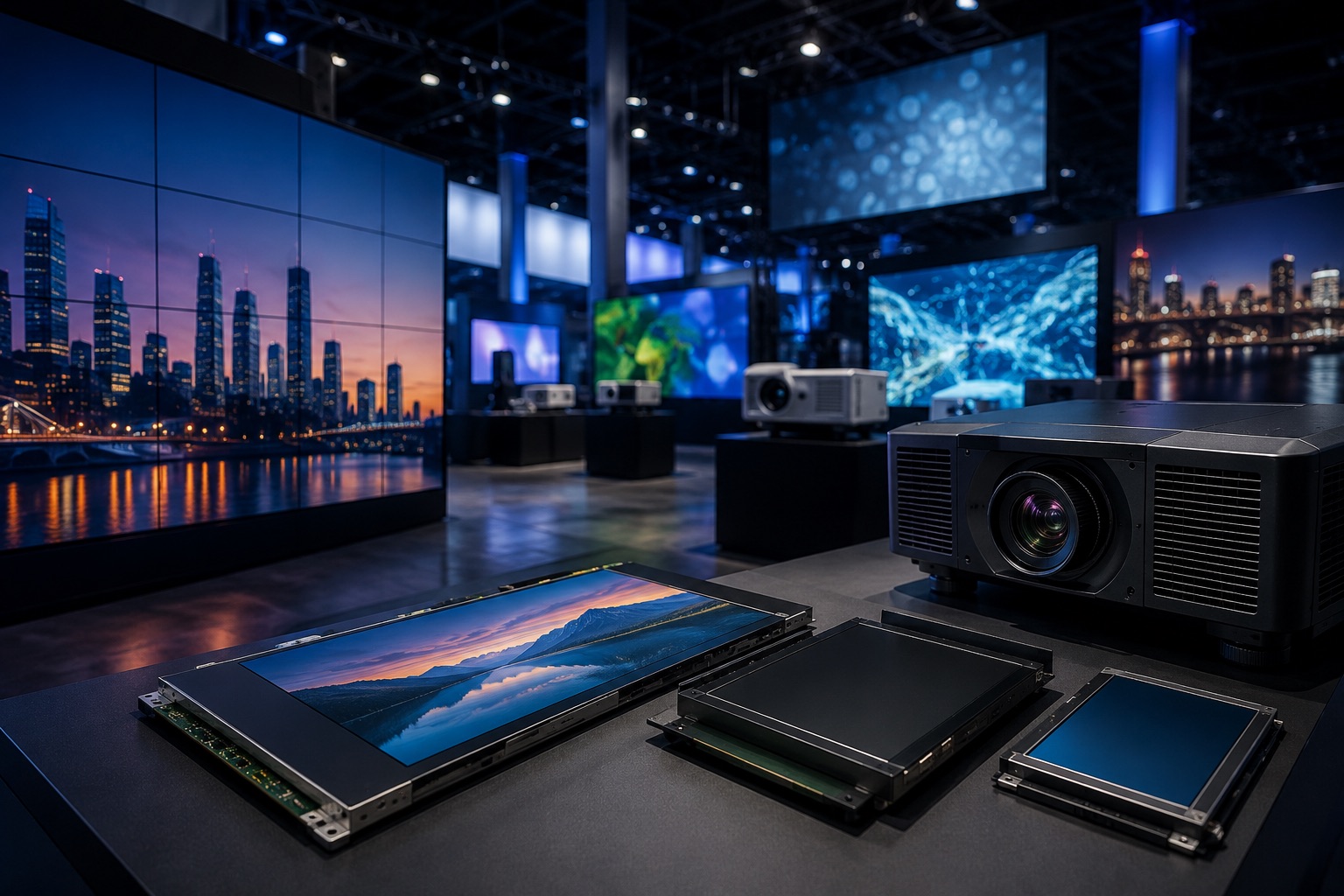
Epson consistently uses InfoComm to demonstrate its 3LCD laser projection technology, and 2026 is no exception. Their booth highlights ultra-short-throw projectors for corporate boardrooms, high-brightness installations for museums and auditoriums, and compact laser units designed for immersive experiences. The common thread across these displays is a push toward higher contrast ratios, wider color gamuts, and longer operational lifespans—often exceeding 20,000 hours of maintenance-free use.
The Shift Toward Hybrid Display Ecosystems
What stands out this year is Epson’s emphasis on hybrid setups: projection systems paired with large-format LCD panels for complementary information displays. For example, a control room might use a laser projector for a central situational map while surrounding LCD modules show real-time data streams. This hybrid approach demands that LCD modules match the projection system’s brightness consistency, color accuracy, and thermal stability.
From a technical standpoint, Epson’s 3LCD architecture relies on three separate LCD panels to modulate light for red, green, and blue channels. While these panels are proprietary, the underlying technology—high-temperature polysilicon (HTPS) LCDs—shares design principles with industrial-grade TFT LCD modules used in professional AV. Both require precise voltage control, wide viewing angles, and resistance to image sticking over extended use.
The Role of LCD Modules in Next-Gen Projection and Large-Format Displays
Epson’s lineup underscores a broader industry trend: LCD modules are no longer just the display in a monitor; they are integral components in projection engines, digital signage, and interactive kiosks. In projection systems, LCD panels serve as light valves, controlling which pixels pass light from the lamp or laser source. The quality of these LCD modules directly determines contrast, brightness uniformity, and response time.
LCD vs Projection Technology: Complementary Roles
It is tempting to view LCD and projection as competing technologies, but InfoComm 2026 demonstrates their synergy. For large venues, projection remains cost-effective for screens over 120 inches, while LCD modules dominate in sizes up to 98 inches for direct-view applications. The key decision factor for procurement teams is the operating environment. Projectors require controlled ambient light and regular maintenance, whereas industrial LCD modules can operate 24/7 in brighter conditions with minimal service intervals.
Industry reports suggest that professional AV installations increasingly specify LCD modules with 700–1500 nits brightness, wide temperature ranges (-20°C to 70°C), and optical bonding for sunlight readability. These specifications align with what Epson’s projection partners demand for companion displays in transportation hubs, command centers, and digital out-of-home advertising.
Selecting Industrial-Grade LCD Modules for Professional AV Applications
When sourcing LCD modules for professional AV applications that complement projection systems, engineers must evaluate parameters beyond standard consumer-grade specifications. The InfoComm 2026 display trends highlight three critical selection criteria:
1. Environmental Resilience
- Operating temperature range: Professional AV equipment often runs continuously in unconditioned spaces. Industrial-grade LCD modules should support -20°C to 70°C ambient operation.
- Humidity and vibration resistance: Modules in transportation or outdoor kiosks require conformal coating and robust mechanical mounting.
- Ingress protection: For public-facing displays, IP54 or higher rating prevents dust and moisture ingress.
2. Optical Performance Consistency
- Brightness uniformity: Variations should stay within 80% across the active area to avoid distracting hot spots.
- Viewing angle stability: IPS or VA technology ensures color shift remains acceptable at 178° horizontal/vertical.
- Contrast ratio in ambient light: Optical bonding with anti-reflective glass improves perceived black levels in bright environments.
3. Longevity and Reliability
- Backlight lifetime: LED backlights rated for 50,000–100,000 hours reduce total cost of ownership.
- Image retention resistance: Industrial-grade LC materials minimize ghosting after static content display.
- Certification readiness: Modules should comply with UL, CE, FCC, and optionally medical (IEC 60601) or automotive (IATF 16949) standards.
For procurement directors, the key trade-off is cost versus reliability. While consumer LCD panels may appear cheaper upfront, their shorter lifespan and limited temperature range often lead to higher replacement costs in professional AV deployments.
How Relialink Supports Demanding Display Requirements with Robust Manufacturing
As a professional LCD module manufacturer, Relialink understands that InfoComm 2026 display trends are not just about what is shown on the exhibition floor—they reflect real-world demands for displays that perform reliably in mission-critical environments. Our manufacturing approach directly addresses the technical challenges highlighted by Epson’s lineup.
Customization for Hybrid AV Systems
We offer industrial-grade TFT LCD modules from 7 to 21.5 inches, with options for:
- High-brightness backlights (up to 1500 nits) for companion displays alongside projectors
- Wide-temperature LCD materials that maintain response times from -30°C to 85°C
- Optical bonding services to eliminate air gaps and reduce reflections
- Custom interface boards supporting LVDS, eDP, MIPI, and V-by-One for seamless integration
Quality Assurance Aligned with Professional AV Standards
Every Relialink module undergoes rigorous testing:
- 100% inspection for pixel defects, brightness uniformity, and color accuracy
- Accelerated life testing at elevated temperatures and humidity
- Shock and vibration testing per ISTA standards
- EMC pre-compliance testing to reduce certification timelines
Our supply chain management ensures traceability from panel sourcing through final assembly, giving OEMs confidence in long-term consistency. For applications requiring medical or automotive certification, we maintain dedicated production lines with documented process controls.
Why This Matters for Your Next Sourcing Decision
When you evaluate LCD module suppliers for professional AV projects, look for manufacturers who can demonstrate experience with industrial-grade specifications—not just datasheet claims. Relialink’s engineering team regularly collaborates with clients to optimize module parameters for specific projection companion displays, control room monitors, and digital signage installations.
Looking for a reliable LCD module supplier that understands the demands of professional AV applications? Contact Relialink today to discuss your custom display requirements and see how our industrial-grade modules can support your next InfoComm-worthy installation.
Summary: Key Takeaways for Hardware Engineers and Procurement Teams
InfoComm 2026 confirms that the line between projection and direct-view LCD continues to blur. Epson’s emphasis on hybrid ecosystems means that specifying the right industrial LCD module is as important as selecting the projection engine. Prioritize modules with wide temperature ranges, high brightness, and long backlight lifetimes. Partner with a manufacturer like Relialink that offers customization, rigorous testing, and certification support—because in professional AV, reliability is the only specification that matters.