MicroLED vs LCD in Automotive 2026: Why LCD Still Powers 60% of Smart Cockpits
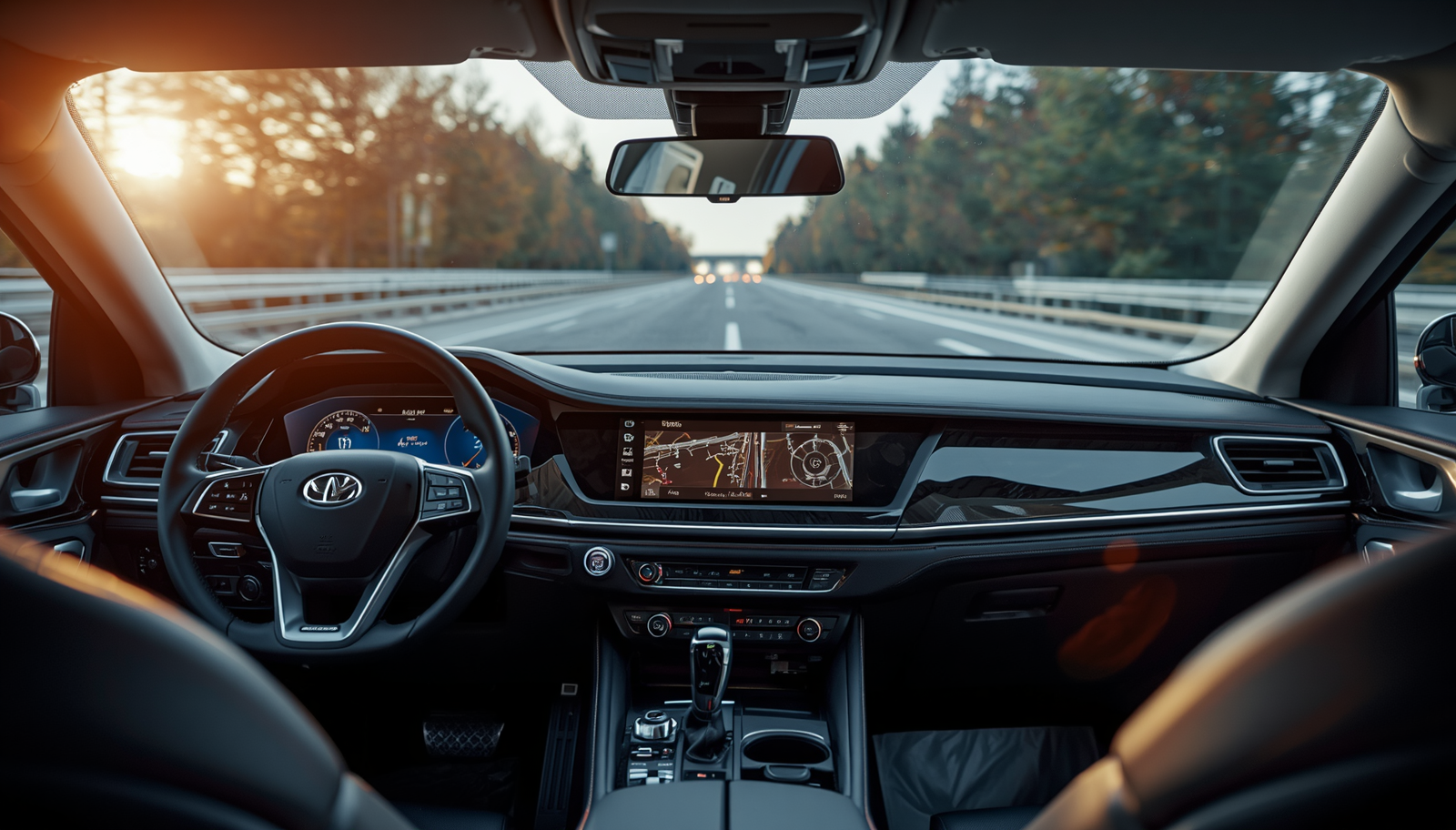
The Smart Cockpit Display Landscape: LCD 60%, OLED 30%, MicroLED <1%
If you attended CES 2026, you witnessed a spectacle of display innovation. BOE unveiled its HERO 2.0 with a staggering 50,000-nit PHUD (Panoramic Head-Up Display). Tianma showcased its IRIS system pushing 120,000 nits for HUD applications. AUO demonstrated INVISY, a transparent MicroLED panel that seemed to defy physics. These are not incremental improvements; they are technological statements.
Yet, for every procurement director and hardware engineer evaluating these next-gen displays, one question cuts through the dazzle: How do I bring this to production without breaking the budget or the supply chain?
The market share data answers that question bluntly. Industry reports suggest that in 2026, standard LCD technology will command approximately 60% of the automotive display market. OLEDs hold roughly 30%, primarily in high-end center stacks and instrument clusters. MicroLED, despite its breathtaking demos, accounts for less than 1% of actual vehicle deployments. The remaining share is split among legacy technologies like passive-matrix OLED and segmented displays.
This distribution is not a failure of innovation. It is a rational response to real-world constraints: cost, reliability, supply chain maturity, and the harsh operating conditions of a vehicle. The smart cockpit is not just a showcase for the latest pixel technology; it is a mission-critical system that must function flawlessly from the frozen tundra to the desert heat. For the B2B decision-maker, understanding this landscape is the first step toward a balanced procurement strategy that marries innovation with production reality.
MicroLED in Automotive: 120K-nit HUDs and the $1000+ Price Problem
Let’s give MicroLED its due. The technology is extraordinary. The 120,000-nit brightness of Tianma’s IRIS HUD is not a gimmick; it enables true sunlight-readable augmented reality overlays. AUO’s INVISY transparent MicroLED offers a see-through display that could revolutionize heads-up displays and smart windows. BOE’s 50K-nit PHUD hints at a future where the entire windshield is an interactive surface.
The Performance Gap That Closes
These performance metrics address genuine pain points. Current LCD-based HUDs, even with high-brightness backlights, struggle in direct sunlight. The contrast ratio is often compromised. MicroLED’s self-emissive nature eliminates the need for a backlight, enabling true blacks and infinite contrast. In transparent mode, it offers an optical clarity that LCDs cannot match without complex and bulky projector systems.
The Cost Barrier That Remains
The problem is not performance; it is price. Analysts estimate that a single automotive-grade MicroLED module, such as those required for a 12.3-inch center display, currently carries a bill of materials (BOM) cost exceeding $1,000. Compare this to a comparable automotive LCD module, which can be sourced for $50 to $150 depending on specifications and volume.
This 10x to 20x cost premium is not a temporary hiccup. The manufacturing process for MicroLED involves the mass transfer of microscopic LEDs onto a backplane—a process with yields that are still maturing. For a Tier-1 supplier, committing to a MicroLED program for a 2027 or 2028 model year means accepting significant yield risk and a supply chain that is effectively single-sourced.
| Technology | Typical Brightness (HUD) | Estimated Module Cost (12.3”) | Supply Chain Maturity |
|---|---|---|---|
| Automotive LCD | 1,000 - 2,000 nits | $50 - $150 | Highly mature, multi-source |
| OLED | 600 - 1,000 nits | $150 - $300 | Maturing, limited sources |
| MicroLED | 50,000 - 120,000 nits | $1,000+ | Nascent, single-source |
For a production vehicle targeting a $40,000 MSRP, a $1,000+ display module is a non-starter for anything beyond a limited-edition halo model. This is the core tension MicroLED faces in automotive.
Why LCD Remains the Volume King: Cost, Reliability, and -40°C to 85°C Range
While MicroLED captures headlines, LCD captures market share. The reasons are deeply practical and rooted in the engineering realities of the automotive environment.
The Cost Advantage of a Mature Ecosystem
The $17.3 billion automotive display market, as estimated by industry analysts, is built on the LCD ecosystem. The supply chain is global, competitive, and deeply experienced. From panel manufacturers to backlight units to driver ICs, every component is available from multiple qualified vendors. This competition drives down costs and ensures supply continuity. For an OEM procuring displays for a million vehicles per year, this reliability is worth more than a spec sheet advantage.
Proven Reliability Under Extreme Conditions
An automotive LCD module must survive temperatures ranging from -40°C to 85°C, and sometimes beyond for under-hood or exposed applications. LCD technology has been qualified for these ranges for decades. The wide-temperature liquid crystal materials, robust backlight units with high-reliability LEDs, and hardened polarizers are all proven.
- Wide Operating Temperature: Standard industrial-grade automotive LCD modules are specified for -30°C to +80°C, with extended versions reaching -40°C to +85°C. This covers virtually all global automotive environments.
- Vibration and Shock: Automotive LCDs are designed to withstand the vibration profiles of instrument panels, center stacks, and rear-seat entertainment. The mechanical bonding and mounting systems are mature.
- Lifetime and Uniformity: The backlight lifetime of a well-designed automotive LCD module typically exceeds 50,000 hours, matching the expected life of the vehicle. Brightness uniformity across the display is tightly controlled.
Interface and Integration Simplicity
For a hardware engineer, integrating an automotive LCD module is a known process. Standard interfaces like LVDS and eDP are well-documented. The timing controller (TCON) logic is mature. The optical bonding process for anti-glare and anti-reflection treatments is standard. This reduces development risk and time-to-market. A new MicroLED module, by contrast, often requires custom driver ICs, new optical bonding techniques, and unfamiliar mechanical tolerances.
Coexistence Strategy: Where LCD Wins and Where MicroLED Fits
The smart cockpit of 2026 and beyond is not a zero-sum game. The most pragmatic strategy for OEMs and Tier-1 suppliers is a coexistence approach, deploying each technology where it offers the best value proposition.
Where LCD Wins Unquestionably
- Instrument Clusters: Reliability and readability in all lighting conditions are paramount. LCDs, particularly with an optical bond and anti-reflective treatment, provide excellent performance at a low cost. The wide viewing angle of modern IPS LCDs is more than sufficient for the driver’s position.
- Center Stack Displays: This is the primary human-machine interface. LCDs dominate here because of their proven touch integration, cost-effectiveness, and reliability. The 60% market share is largely driven by center stack deployments.
- Rear-Seat Entertainment: Cost sensitivity is highest in rear-seat systems. LCDs offer the best value for large-format screens (15-17 inches) where brightness and contrast requirements are less demanding than the front seat.
Where MicroLED Fits (For Now)
- Halo Vehicles and Limited Editions: The high cost is acceptable for flagship models where innovation is a key marketing message. A 120K-nit MicroLED HUD in a $150,000+ luxury sedan is a different proposition than in a mass-market crossover.
- True Transparent Displays: For smart windows and advanced augmented reality HUDs, MicroLED’s transparency is a unique differentiator. LCDs cannot match this without bulky projector systems.
- High-Performance HUDs: For Level 3+ autonomous vehicles, the HUD becomes a primary safety display. The ultra-high brightness and contrast of MicroLED may become a requirement for safety certification, justifying the premium.
For the vast majority of production programs targeting 2027-2029 model years, the optimal strategy is to lead with automotive LCD modules for volume applications and reserve MicroLED for specific, high-value features where its unique capabilities command a premium.
Relialink Industrial-Grade Automotive LCD Modules for Next-Gen Cockpits
At Relialink, we understand that the foundation of a successful smart cockpit is not the flashiest technology, but the most reliable one. Our focus is on delivering industrial-grade automotive LCD modules that meet the stringent demands of Tier-1 suppliers and OEMs.
Built for the Road
Our automotive LCD modules are designed from the ground up for the automotive environment. We utilize premium wide-temperature liquid crystal materials and high-efficiency LED backlights to ensure consistent performance from -40°C to +85°C. Every module undergoes rigorous testing for vibration, thermal shock, and humidity to meet automotive qualification standards.
Customization and Support
We know that every cockpit is unique. Relialink offers comprehensive customization options:
- Optical Bonding: We provide optical bonding to eliminate the air gap, reducing glare and improving sunlight readability.
- Interface Integration: Our engineering team can integrate standard LVDS, eDP, and MIPI interfaces to match your system architecture.
- Touch Integration: We offer PCAP touch integration, including cover glass customization with anti-glare and anti-fingerprint coatings.
A Supply Partner You Can Trust
In an era of supply chain volatility, Relialink provides stability. Our relationships with leading panel manufacturers and component suppliers ensure consistent quality and delivery. We are not just a supplier; we are a partner in your product development, helping you balance the allure of innovation with the discipline of production reality.
Looking for a reliable automotive LCD module supplier for your next smart cockpit project? Contact Relialink today to discuss your custom display requirements and see how our industrial-grade solutions can power your 2027 and 2028 production programs.