Why TFT-LCD Still Dominates Cost-Sensitive VR: A 2026 Supply Chain Analysis
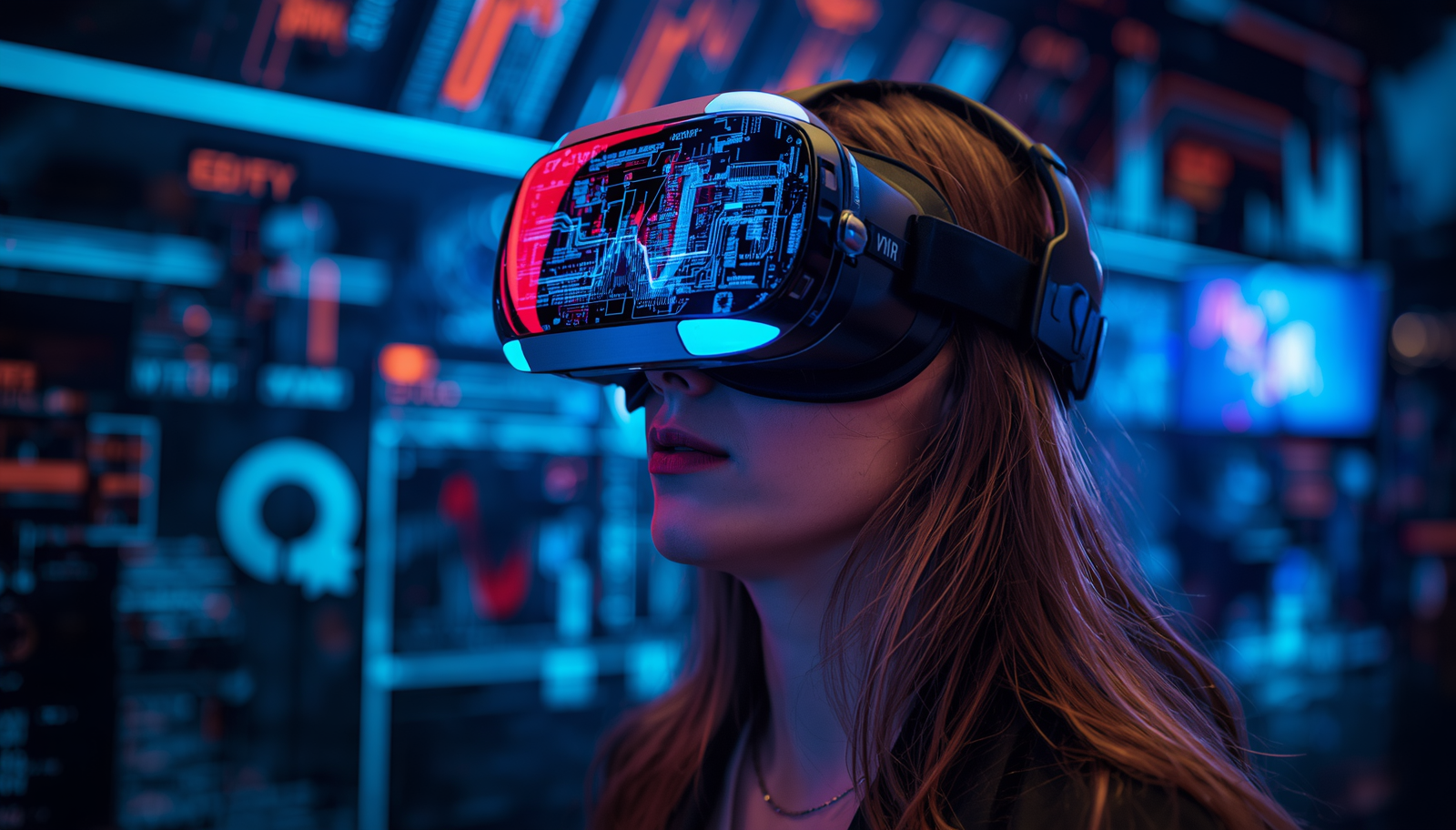
The 3-Way Near-Eye Display Segmentation in 2026: Where LCD Fits
If you are sourcing display modules for VR headsets in 2026, you are navigating a supply chain that has fractured into three distinct paths. The industry has moved past the “one technology fits all” approach. Today, near-eye display sourcing splits cleanly along cost and performance lines:
- TFT-LCD for cost-sensitive, high-volume VR headsets (standalone and PC-tethered)
- MicroOLED (OLEDoS) for premium, high-resolution headsets targeting prosumers and enterprise
- LCoS primarily for augmented reality (AR) glasses and waveguide-based systems
This segmentation is not accidental. It is driven by fundamental physics, manufacturing economics, and end-user price sensitivity. For VR OEMs targeting the sub-$500 headset market—which industry reports suggest represents over 60% of total VR unit shipments—TFT-LCD remains the only viable near-eye display technology that balances performance with a bill-of-materials (BOM) cost that allows for competitive retail pricing.
The key insight for procurement directors and hardware engineers is this: while MicroOLED offers superior black levels and contrast, its reliance on silicon backplanes and low-yield manufacturing processes keeps per-module costs 3-5x higher than equivalent LCD solutions. Meanwhile, LCoS, while promising for AR, lacks the brightness and field-of-view characteristics required for immersive VR experiences.
TFT-LCD Economics: Multi-Source Gen-6/8 Supply and BOM Advantages
The Gen-6 and Gen-8 Supply Advantage
One of the strongest arguments for TFT-LCD in VR display sourcing is the mature, multi-source supply chain built around Generation 6 (Gen-6) and Generation 8 (Gen-8) glass substrates. These fabrication lines—originally developed for large-format LCD TVs and monitors—have been repurposed and optimized for high-resolution small-to-medium displays.
Why this matters to you as a buyer: Gen-6 and Gen-8 fabs are operated by multiple tier-1 panel makers across Taiwan, South Korea, and China. This geographic and supplier diversity provides:
- Pricing leverage: Multiple qualified sources prevent single-supplier lock-in and allow for competitive bidding
- Capacity flexibility: When VR demand fluctuates, these fabs can shift production between TV, monitor, and VR display allocations
- Mature yields: Years of process refinement mean defect rates are well-understood and predictable
In contrast, MicroOLED relies on specialized silicon foundries with limited capacity and higher per-wafer costs. Analysts estimate that a single 8-inch silicon wafer yields only 50-80 usable 0.7-inch MicroOLED panels, whereas a single Gen-6 glass substrate can yield hundreds of 2-3 inch VR LCD panels.
BOM Cost Breakdown
When evaluating VR display module costs for volume production, the TFT-LCD advantage becomes clear:
| Cost Component | TFT-LCD (2.1” Fast-Switch) | MicroOLED (0.7” OLEDoS) |
|---|---|---|
| Panel/Backplane | $8-12 (Gen-6 multi-source) | $35-50 (Si foundry limited) |
| Backlight Unit | $3-5 (standard mini-LED) | N/A (self-emissive) |
| Driver IC | $1-2 (commodity) | $3-5 (custom high-speed) |
| Total Module Cost | $12-19 | $38-55 |
For a VR headset targeting a $299-399 retail price point, the display module alone consuming $12-19 leaves room for optics, processors, tracking sensors, and enclosure costs. At $38-55, the MicroOLED module would consume nearly the entire BOM budget before accounting for any other components.
Technical Ceilings and Workarounds: Black Levels, Switching Speed, Backlight Optimization
Addressing the Black Level Challenge
Critics of TFT-LCD in VR applications frequently point to black levels as the primary technical limitation. Traditional LCDs with edge-lit backlights achieve black levels of only 0.1-0.3 nits, resulting in the “gray haze” effect that breaks immersion in dark VR scenes.
However, the VR display industry has developed effective workarounds. The most impactful is local dimming with mini-LED backlights. By dividing the backlight into hundreds or thousands of individually controllable zones, VR LCD modules can achieve black levels approaching 0.001 nits in dark areas while maintaining 500+ nits peak brightness in bright areas.
For cost-sensitive VR headsets, a simpler approach uses global dimming with pulse-width modulation (PWM) . While not as precise as mini-LED local dimming, this technique reduces black levels to 0.01-0.03 nits—sufficient for most gaming and productivity VR applications.
Switching Speed: The Fast-Switch LCD Evolution
Another historical concern has been LCD response time. Early VR LCDs suffered from motion blur due to 16-20ms gray-to-gray (GtG) response times. Today, fast-switch LCD technologies—including oxide TFT and ferroelectric liquid crystal modes—achieve 3-5ms GtG response times, which is adequate for 90Hz and even 120Hz VR operation.
The key technical parameters for VR-grade TFT-LCD modules include:
- Response time: ≤5ms GtG at 25°C
- Refresh rate: 90-120Hz native (overclockable to 144Hz in some designs)
- Persistence: 2-3ms backlight strobing for low-persistence operation
- Resolution: 1200x1600 to 1600x1600 per eye (2.1-2.5 inch diagonal)
These specifications, while not matching the 2000+ PPI of MicroOLED, are entirely sufficient for current-generation VR experiences and allow for lower GPU requirements on the headset side.
Backlight Optimization for VR
Modern VR LCD modules incorporate several backlight optimizations that directly improve the user experience:
- Low-persistence strobing: The backlight flashes for only 2-3ms per frame, reducing motion blur and sample-and-hold artifacts
- Adaptive brightness: Dynamic adjustment based on scene content to improve perceived contrast ratio
- Wide color gamut: Quantum dot films in the backlight achieve 90-95% DCI-P3 coverage, exceeding sRGB standards
These optimizations demonstrate that the TFT-LCD platform is not static—it continues to evolve with targeted improvements that address VR-specific requirements.
How Relialink Custom LCD Modules Serve VR OEM Needs
For VR OEMs evaluating display module suppliers, Relialink offers a compelling combination of technical capability and supply chain flexibility.
Customization Capabilities
Relialink specializes in custom LCD module design and manufacturing for near-eye applications. Our engineering team works directly with your hardware team to optimize:
- Optical bonding: Custom index-matched adhesives reduce internal reflections and improve contrast in VR optics
- Backlight tuning: Mini-LED zone count, PWM frequency, and color temperature calibrated to your specific lens and housing design
- Mechanical integration: Custom flex cable lengths, connector types, and mounting frame designs that simplify your assembly process
- Interface selection: MIPI DSI or eDP interface support depending on your SoC and bandwidth requirements
Supply Chain Resilience
In the current global display supply environment, delivery reliability is as important as technical specifications. Relialink sources panels from multiple Gen-6 and Gen-8 fabs, allowing us to:
- Maintain 8-12 week lead times for custom modules
- Offer buffer stock programs for high-volume OEMs
- Qualify alternative panel sources without requalification of your entire optical system
- Provide engineering samples within 4-6 weeks of design freeze
Quality and Reliability
All VR display modules from Relialink undergo:
- 100% optical inspection for pixel defects, mura, and brightness uniformity
- Temperature cycling tests (-20°C to +70°C) to ensure reliability in varied operating environments
- Mechanical shock and vibration testing per industry standards
- Long-term burn-in testing to validate backlight LED lifetime
For VR OEMs, this translates to fewer field failures, reduced RMA rates, and faster time-to-market for new headset designs.
Looking for a reliable LCD module supplier for your next VR headset project? Contact Relialink today to discuss your custom display requirements. Our engineering team is ready to help you balance performance, cost, and delivery flexibility.
Why Meta’s OLED Microdisplay Delay Matters: The Yield and Cost Reality
The persistent immaturity of OLED microdisplay supply — the same reason a company with Meta’s resources delayed its next-generation high-end VR headset — is the strongest near-term validation of the analysis above. Three structural constraints keep OLEDoS out of the mainstream:
- Yield rates remain a bottleneck. Manufacturing OLED microdisplays on silicon backplanes (OLEDoS) is inherently sensitive to particulates, wafer defects, and uniformity issues. Industry sources suggest yield rates for high-resolution OLED microdisplays (exceeding 4K per eye) remain in the 20-40% range for many foundries, versus yields consistently above 90% for standard LCD panels and around 85% for advanced fast-switching variants. For a procurement director, these yield figures translate directly into cost per usable display and supply reliability.
- Brightness limitations constrain optical design. VR headsets using pancake lenses — the current standard for compact form factors — inherently lose 50-70% of light output through the folded optical path. To deliver a comfortable 150-200 nits to the user’s eye, the panel must emit 400-700 nits. While OLED microdisplays can achieve these levels, doing so at sustained brightness accelerates organic degradation and introduces burn-in risk; LCD panels comfortably exceed 1000 nits with active backlighting, providing ample headroom without compromising lifespan.
- Cost structures remain unfavorable for volume. Current estimates place the bill-of-materials cost for a pair of 4K OLED microdisplays at approximately $150-250 per headset, compared to $30-60 for a pair of comparable high-resolution LCD panels. For a product manager targeting a $500-800 retail price point, that $100-200 differential is often a deal-breaker.
The market will bifurcate rather than flip: OLED microdisplays will gradually find their footing in the $1,500+ ultra-premium segment (enterprise training, high-end simulation) as yields improve and dedicated capacity comes online, while the $300-1,000 mainstream and prosumer segments continue to rely on advanced LCD — fast-switching panels, mini-LED backlighting for local dimming, and ever-higher refresh rates. Do not design your next VR product around a display technology that cannot yet deliver on its volume and cost promises.
Market Outlook: $2.17B in 2025 to $6.65B by 2030
The near-eye display market is projected to grow from approximately $2.17 billion in 2025 to $6.65 billion by 2030, representing a compound annual growth rate (CAGR) of over 25%. While MicroOLED and LCoS will capture a growing share of this market—particularly in premium and AR segments—TFT-LCD is expected to maintain its volume leadership throughout this period.
Key Drivers for TFT-LCD Sustained Dominance
- Volume market growth: The largest VR headset OEMs continue to target mass-market price points where display cost is the single largest BOM line item
- Manufacturing maturity: Gen-6 and Gen-8 LCD fabs have decades of process refinement and cost reduction built in
- Ecosystem compatibility: Existing VR optics designs, driver ICs, and backlight controllers are optimized for LCD modules
- Incremental improvement: Fast-switch LCD, mini-LED backlighting, and oxide TFT continue to close the gap with OLED in key metrics
What This Means for Your Sourcing Strategy
If you are planning a VR headset launch in 2026-2027, the decision between TFT-LCD and MicroOLED should be driven by your target price point and performance requirements:
- Sub-$399 headsets: TFT-LCD is the only economically viable option
- $399-599 headsets: TFT-LCD with mini-LED backlighting offers the best value-for-performance ratio
- $599+ headsets: MicroOLED becomes viable for premium, high-resolution applications
For the vast majority of VR OEMs, the TFT-LCD supply chain—with its multi-source Gen-6/8 manufacturing base, mature backlight ecosystem, and proven fast-switch panel technology—will remain the foundation of cost-effective VR display solutions through 2030 and beyond.