Samsung Display IT AMOLED IT OLED: Complete Overview
Why Samsung IT OLED Matters for Your Next Display Project
If you are responsible for sourcing display modules for industrial equipment, medical devices, or automotive applications, the shift toward IT OLED technology is no longer a distant trend—it is reshaping your supply chain options today. Samsung Display’s aggressive push into IT AMOLED panels signals a fundamental change in how high-end displays are manufactured, priced, and qualified. For procurement teams and hardware engineers, understanding this landscape is critical because it directly impacts your lead times, cost structures, and long-term supplier relationships. The display you choose today will define your product’s competitiveness for the next five to seven years.
Background: Understanding Samsung Display IT AMOLED and IT OLED
What Exactly Is IT OLED?
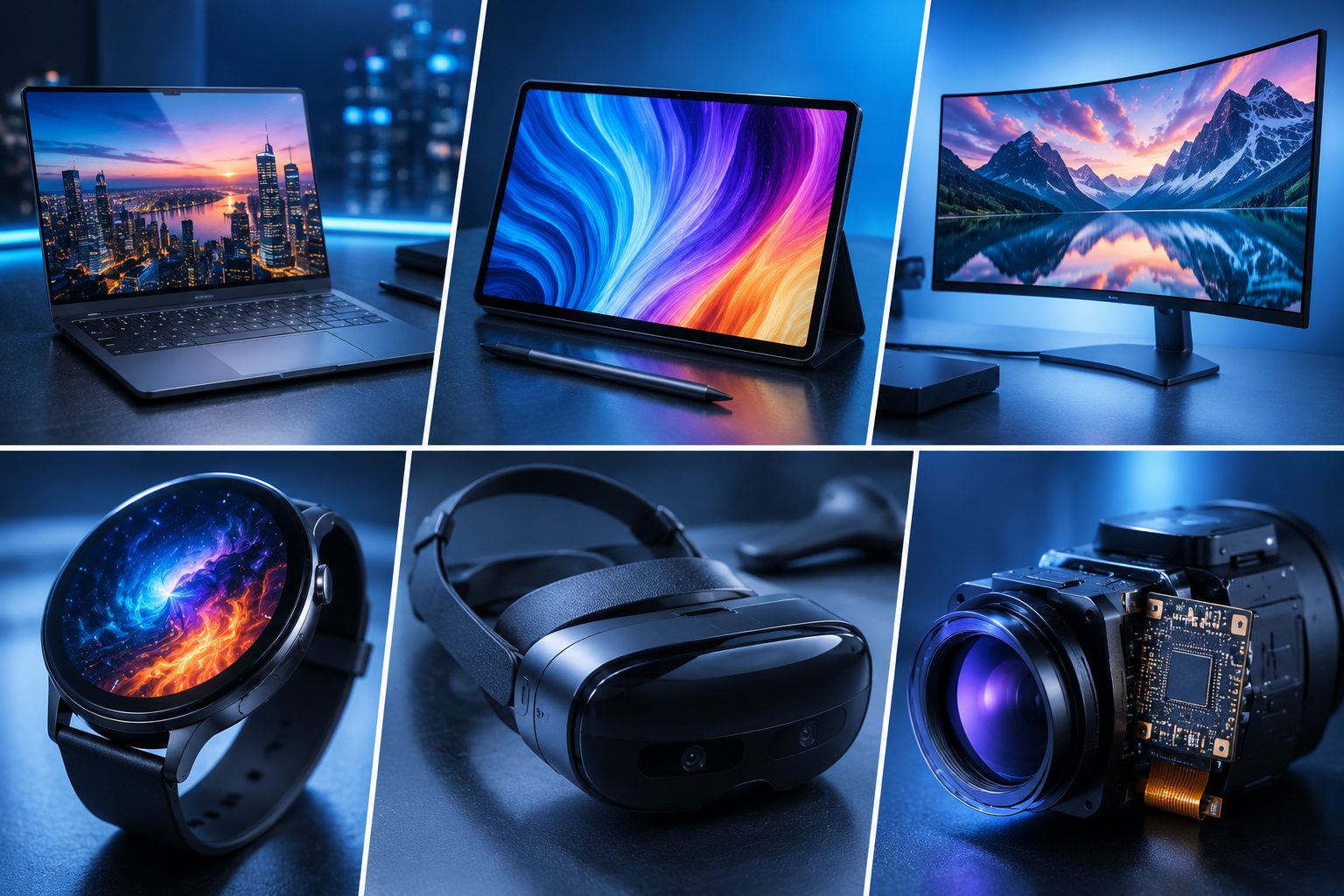
IT OLED refers to organic light-emitting diode displays designed specifically for information technology applications—think tablets, laptops, monitors, and increasingly, industrial human-machine interfaces. Unlike small smartphone panels, IT OLEDs require larger glass substrates, tighter uniformity tolerances, and more demanding lifetime specifications. Samsung Display has been the dominant force in this segment, leveraging its years of AMOLED expertise to transition from mobile-sized panels to larger format displays.
The Samsung AMOLED Advantage
Samsung AMOLED technology brings several inherent benefits that are particularly attractive for B2B applications:
- Superior contrast ratios: True blacks and high dynamic range for medical imaging and control room displays
- Faster response times: Critical for real-time data visualization and interactive industrial interfaces
- Thinner, lighter modules: Enables more flexible mechanical design for portable diagnostic equipment
- Wide color gamut: Essential for applications requiring accurate color reproduction, such as telemedicine and design workstations
However, the transition to IT AMOLED is not without technical hurdles. Burn-in resistance, brightness uniformity across large areas, and extended operating temperature ranges remain areas where LCD technology still has advantages in certain industrial settings.
Samsung’s Production Strategy
Samsung Display has committed billions to dedicated IT OLED production lines, recognizing that laptops and tablets represent the next growth frontier after smartphones. Their approach involves specialized equipment for oxide TFT backplanes, which deliver the electron mobility needed for large-area AMOLED panels. This investment signals long-term confidence in OLED technology for professional and industrial applications—but it also creates a two-tier market where OLED commands premium pricing while LCD remains the workhorse for cost-sensitive projects.
Current Industry Context: The Competitive Landscape
A Market in Transition
The IT display market is experiencing a significant supply-demand recalibration. Industry reports suggest that OLED penetration in IT applications is still in single digits globally, but the trajectory is unmistakable. Samsung Display is not alone in this race—Chinese panel manufacturers are scaling their own IT AMOLED production capabilities, which will inevitably affect pricing dynamics and availability.
Key Data Points Shaping Procurement Decisions
Several factors should inform your sourcing strategy:
- Capacity expansion: New generation fabs dedicated to IT OLED are coming online, but yield ramp takes time. Industry analysts estimate that meaningful volume for mid-to-large size IT OLED panels will only materialize over multiple quarters.
- Pricing premium: IT AMOLED panels currently command a significant premium over comparable LCD modules—often multiple times higher depending on size and specification.
- Qualification cycles: For medical and automotive applications, OLED qualification is lengthy. Medical-grade displays require certifications that add months to development timelines.
- Supply concentration: While Samsung Display leads in technology maturity, buyers should monitor emerging suppliers to avoid single-source dependencies.
What This Means for Different Application Verticals
The implications vary by industry:
- Medical devices: OLED’s contrast and color accuracy are compelling for diagnostic displays, but long-term reliability data is still accumulating. Many medical OEMs are taking a hybrid approach—OLED for high-end visualization, LCD for patient monitoring.
- Industrial automation: Harsh environments with wide temperature ranges and continuous operation favor LCD’s proven durability. IT OLED is entering this space carefully, primarily in controlled indoor environments.
- Automotive: In-cabin displays are adopting AMOLED for design flexibility and premium aesthetics, but automotive-grade qualification remains stringent and supplier-specific.
Implications for B2B Display Procurement
Rethinking Your Display Strategy
The rise of Samsung IT OLED forces procurement teams to evaluate their display roadmap with fresh eyes. The decision is no longer simply LCD versus OLED—it is about matching technology to application requirements while managing cost, risk, and timeline constraints.
Key Considerations for Sourcing Decisions
When evaluating whether IT AMOLED makes sense for your application, consider the following:
- Total cost of ownership: OLED modules cost more upfront, but may reduce system-level costs through thinner designs and fewer backlight components
- Supply security: Single-source OLED supply can create vulnerability; dual-sourcing strategies become more complex with OLED due to panel-specific driver ICs and custom interfaces
- Longevity requirements: Industrial displays often need 5-10 year availability commitments. LCD modules have well-established longevity programs; OLED is still proving its long-term support model
- Environmental specifications: If your product operates outdoors or in extreme temperatures, LCD’s mature performance envelope may be safer
The Hybrid Approach
Many B2B buyers are discovering that the most pragmatic strategy is maintaining both LCD and OLED capabilities in their product portfolio. This approach allows you to:
- Offer OLED-based products where premium performance justifies pricing
- Retain LCD-based solutions for cost-sensitive or environmentally demanding applications
- Mitigate supply chain risk by not committing entirely to a single display technology
- Build relationships with multiple display manufacturers to leverage competitive dynamics
How Relialink Helps Buyers Navigate the IT OLED Transition
Your Partner for Technology-Agnostic Display Solutions
At Relialink, we understand that the Samsung IT OLED conversation is just one piece of your broader display strategy. Our approach is not to push a single technology but to help you make informed decisions based on your specific application requirements, volume projections, and market positioning.
What We Bring to Your Sourcing Process
- Technology expertise: Our engineering team stays current on IT AMOLED developments, LCD innovations, and emerging alternatives. We help you translate Samsung Display’s technology roadmap into practical implications for your product.
- Supply chain flexibility: We maintain relationships across multiple panel suppliers and technologies. When your application calls for industrial LCD, we deliver proven solutions. When OLED is the right fit, we guide you through the qualification process.
- Customization capability: Whether you need specific interface protocols, optical bonding, or mechanical modifications, we adapt display modules to your exact requirements—regardless of underlying panel technology.
- Long-term support mindset: We understand that industrial and medical products require multi-year availability. Our sourcing strategies prioritize supply continuity over short-term cost optimization.
Navigating the Qualification Maze
If you are considering IT AMOLED for a professional application, you likely have questions about burn-in testing, lifetime specifications, and environmental compliance. Relialink can help you develop realistic qualification criteria, interpret manufacturer datasheets with appropriate skepticism, and set up acceptance testing that protects your product quality without adding unnecessary delays.
Actionable Next Steps: Selection Criteria for Your Display Project
A Practical Framework for Decision-Making
Before you commit to a display technology—whether Samsung IT OLED, traditional LCD, or a hybrid approach—work through these selection criteria:
- Define your operating environment: Temperature range, humidity, vibration, and exposure to direct sunlight dramatically affect technology suitability
- Quantify your lifetime requirements: How many hours of continuous operation? What is your expected product lifespan? OLED and LCD have different degradation curves
- Assess your optical performance needs: Contrast ratio, brightness, viewing angle, and color accuracy requirements should be specified before evaluating technologies
- Consider your interface ecosystem: Existing hardware designs, processor capabilities, and software stacks may favor one display interface over another
- Project your volumes realistically: OLED pricing improves with volume, but minimum order quantities may be higher than LCD alternatives
- Evaluate your certification requirements: Medical, automotive, and industrial certifications have different display qualification standards
Practical Recommendations
For most B2B display buyers, we recommend the following approach:
- Start with your application requirements, not the technology trend. Document your must-have specifications before engaging suppliers.
- Request side-by-side evaluations of LCD and OLED modules in your actual operating environment. Datasheet specifications rarely tell the full story.
- Build in display technology flexibility at the system architecture level. Standardized interfaces and mechanical envelopes that accommodate both technologies reduce future switching costs.
- Engage display partners early in your product development cycle, not after your design is locked. Early collaboration reduces qualification risk and timeline surprises.
The Bottom Line for Your Display Sourcing Strategy
The Samsung IT OLED momentum is real, and it will continue to reshape the display market. But the smartest procurement strategy is not about chasing the latest technology—it is about matching the right display solution to each application’s unique requirements, while maintaining supply chain resilience and cost discipline. Whether you are exploring Samsung AMOLED for a premium medical visualization product or sticking with proven LCD for industrial automation, the key is making deliberate, informed choices.
Looking for a display partner who can help you navigate the IT OLED transition without locking you into a single technology path? Contact Relialink today to discuss your project requirements and let our engineering team recommend the optimal display solution for your specific application.
Related Reading
- IT OLED Gen 8.6 Fab Investment Surge: What It Means for LCD Module Strategies in 2026 — the full Gen 8.6 IT OLED landscape (Samsung, BOE, CSOT, Visionox) and what it means for LCD procurement.
- Supplier profile series: JDI Display Fab: Complete Overview · LG Display OLED Display LCD: Complete Overview · Visionox AMOLED: Complete Overview